
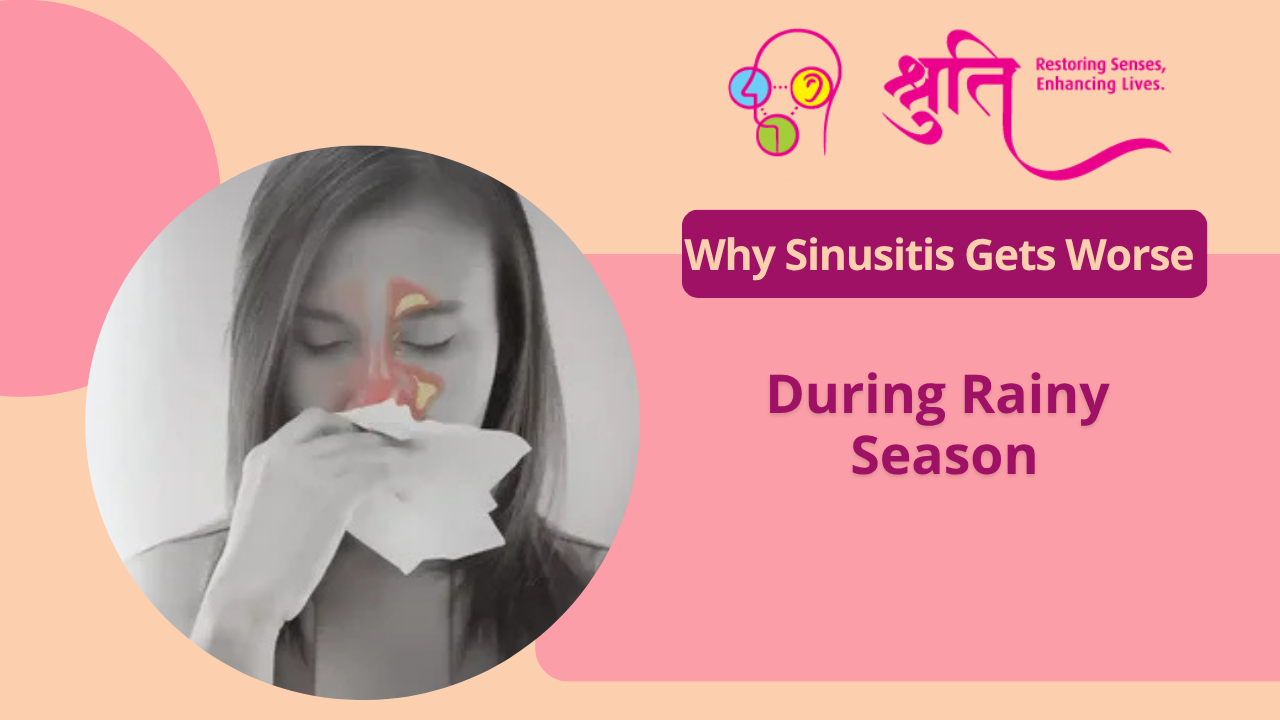
Why Sinusitis Gets Worse During Rainy Season: Causes & Prevention Tips
The monsoon season brings cooler weather and relief from summer heat, but it can also trigger several health problems, especially related to the nose and sinuses.
Many people notice worsening sinus symptoms during rainy months, including blocked nose, facial pressure, headaches, nasal discharge, and difficulty breathing comfortably. Increased humidity, damp surroundings, mold growth, and seasonal allergies create conditions that can aggravate sinus inflammation.
Understanding why sinusitis gets worse during rainy season and following preventive measures can help reduce flare-ups and maintain better respiratory health.
If you experience repeated sinus problems during monsoon, consulting an experienced ENT specialist in Mumbai like Dr. Shruti Sharma can help identify the cause and provide effective treatment.
Why Does Sinusitis Increase During Monsoon?
During rainy weather, several environmental changes can affect sinus health.
Increased Humidity Levels
High moisture levels during monsoon can cause swelling of the nasal lining and slow down mucus drainage from the sinuses.
This can lead to:
- Nasal blockage
- Mucus buildup
- Sinus pressure
- Increased risk of infection
Growth of Mold and Allergens
Damp conditions encourage the growth of:
- Mold spores
- Dust mites
- Fungal allergens
These allergens can irritate the nasal passages and trigger sinus inflammation, especially in people with allergic rhinitis.
Frequent Viral Infections
Monsoon increases the spread of viral infections due to:
- Sudden weather changes
- Increased indoor crowding
- Lower immunity during seasonal changes
Common colds can block sinus openings and may develop into sinus infections if symptoms persist.
Sudden Temperature Changes
Moving between air-conditioned environments and humid outdoor weather can irritate the nasal passages and make sinus symptoms worse.
What Is Sinusitis?
Sinusitis is the inflammation or infection of the sinus cavities located around the nose, cheeks, and forehead.
Normally, sinuses produce mucus that drains through small openings into the nose. When these passages become blocked due to swelling, allergies, or infection, mucus can accumulate and cause symptoms.
Sinusitis can be:
Acute Sinusitis
A short-term condition usually caused by infections or allergies.
Chronic Sinusitis
A long-lasting condition where symptoms continue for several weeks or keep recurring.
Common Symptoms of Sinusitis During Rainy Season
Sinus problems may cause:
- Blocked or Stuffy Nose Inflammation inside the nasal passages can make breathing difficult.
-
Facial Pain or Pressure
You may feel discomfort around:
- Forehead
- Cheeks
- Eyes
- Nose area
- Headache Sinus pressure can cause heaviness or pain, especially around the forehead and face.
- Thick Nasal Discharge Yellow or green mucus may occur during sinus infections.
- Reduced Sense of Smell Blocked nasal passages can temporarily affect your ability to smell.
-
Post-Nasal Drip
Mucus flowing down the throat can cause:
- Throat irritation
- Cough
- Frequent throat clearing
Common Triggers That Worsen Sinusitis During Monsoon
Certain factors can increase sinus flare-ups.
Exposure to Mold
Damp walls, wet clothes, and poorly ventilated rooms can encourage mold growth.
Dust and Pollution
Rain may temporarily reduce dust, but pollutants and allergens can still trigger sinus symptoms.
Getting Wet in Rain
Sudden exposure to cold rain may worsen nasal congestion in some individuals.
Poor Indoor Air Quality
Closed windows and increased moisture can increase allergens inside homes and offices.
How to Prevent Sinus Problems During Rainy Season?
Following simple habits can help protect your sinus health.
- Use saline nasal spray if recommended
- Keep nasal passages clean
- Wash hands regularly
- Avoid touching your face frequently
- Prevent mold growth at home
- Improve ventilation
- Avoid keeping damp clothes indoors
- Keep rooms clean and dry
If you have allergic sinus problems:
- Identify and avoid triggers
- Reduce exposure to dust and mold
- Follow prescribed allergy treatment
Drinking enough water helps keep mucus thin and supports better drainage.
Avoid Self-MedicationUsing nasal sprays, antibiotics, or other medicines without medical advice may worsen symptoms or delay proper treatment.
Common Mistakes That Can Worsen Sinusitis
Avoid these habits during monsoon:
- Ignoring persistent nasal blockage
- Taking antibiotics without consultation
- Using nasal drops for long periods without advice
- Living in damp environments
- Delaying treatment for recurring sinus problems
- Ignoring allergy symptoms
These mistakes can increase the chances of repeated sinus infections.
When Should You Consult an ENT Specialist?
Seek medical advice if you experience:
Early diagnosis can help prevent sinusitis from becoming chronic.
How Dr. Shruti Sharma Treats Sinus Problems During Monsoon
Dr. Shruti Sharma provides comprehensive ENT evaluation and treatment for sinus-related concerns.
Treatment approaches may include:
- Detailed nasal and sinus examination
- Allergy evaluation
- Diagnostic tests when required
- Medication based on the underlying cause
- Preventive guidance for recurring sinus problems
A personalized treatment plan helps manage symptoms effectively and improve long-term sinus health.
Cost of Sinus Treatment in Mumbai
The cost of sinus treatment depends on:
- Severity of sinus condition
- Required investigations
- Type of treatment needed
- Follow-up requirements
Early consultation can help identify the problem and avoid unnecessary complications.
Monsoon Sinus Care Checklist
- Keep indoor spaces dry and ventilated
- Avoid exposure to mold and dust
- Maintain nasal hygiene
- Stay hydrated
- Treat allergies early
- Avoid self-medication
- Consult an ENT specialist for recurring symptoms
Quick FAQs
Why does sinusitis get worse during rainy season?
High humidity, mold growth, allergies, and frequent viral infections can increase nasal inflammation and worsen sinus symptoms during monsoon.
What are common symptoms of sinusitis?
Common symptoms include blocked nose, facial pressure, headache, thick nasal discharge, reduced smell, and post-nasal drip.
Can rainwater cause sinus infection?
Rainwater itself does not directly cause sinus infection, but weather changes, allergies, and infections during monsoon can trigger sinus problems.
How can I prevent sinusitis during monsoon?
Maintain nasal hygiene, avoid allergens, keep your surroundings dry, stay hydrated, and seek early treatment for symptoms.
When should I see an ENT specialist for sinus problems?
Consult an ENT doctor if symptoms persist, keep returning, or affect breathing and daily activities.
Can allergies worsen sinusitis during rainy season?
Yes. Increased mold and dust mites during monsoon can trigger allergies and worsen sinus inflammation.
Where can I get sinus treatment in Mumbai?
Dr. Shruti Sharma provides expert diagnosis and treatment for sinusitis, allergies, and other ENT conditions in Mumbai.
Book Appointment with Dr. Shruti Sharma
If rainy weather triggers your sinus problems, timely medical advice can help you breathe better and prevent repeated infections. Consult Dr. Shruti Sharma for expert ENT care in Mumbai.
Book your appointment today and protect your sinus health this monsoon.
Book Your Appointment Today