
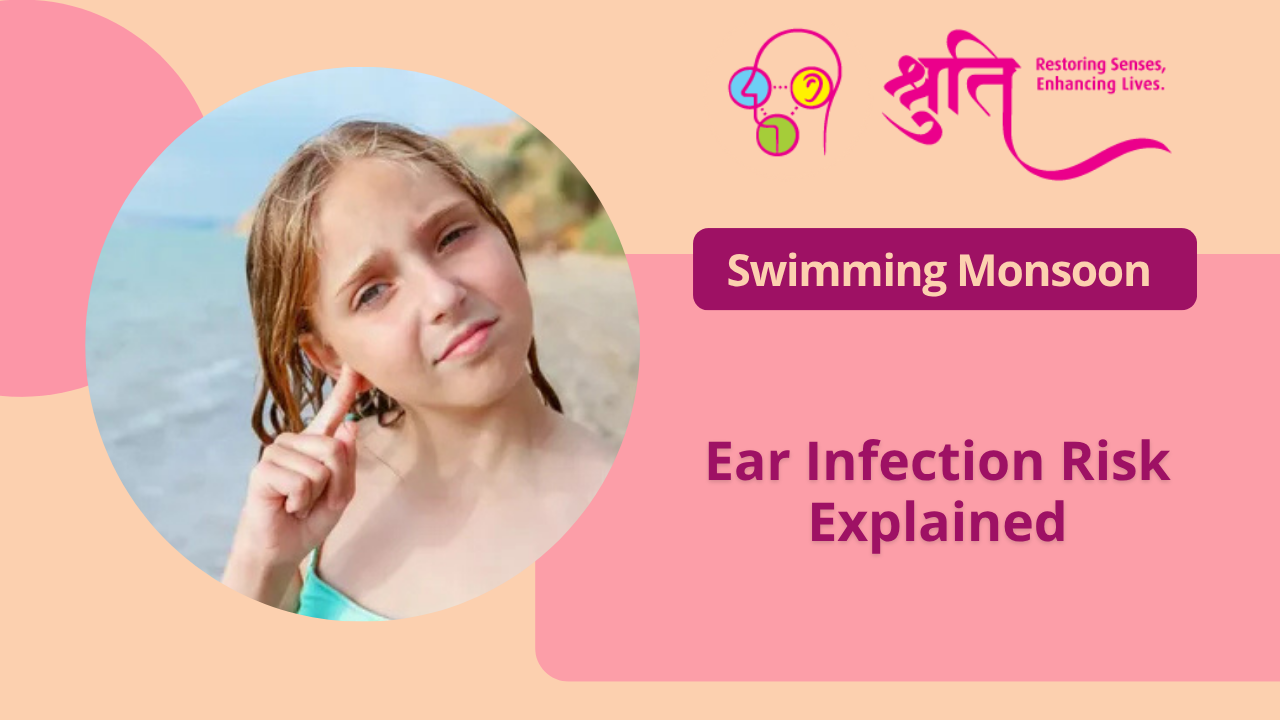
🌧️ Swimming & Monsoon Ear Infection Risk Explained
The monsoon season is a popular time for swimming, but increased humidity, frequent water exposure, and moisture trapped inside the ear can raise the risk of ear infections.
Many people experience ear itching, pain, blockage, or discharge after swimming during rainy months. While water itself does not directly cause infection, moisture inside the ear canal can create an ideal environment for bacteria and fungi to grow.
Understanding the connection between swimming, monsoon weather, and ear infections can help you take simple precautions to protect your ear health.
If you experience repeated ear infections after swimming or water exposure, consulting an experienced ENT specialist in Mumbai like Dr. Shruti Sharma can help with proper diagnosis and treatment.
🌦️ Why Does Monsoon Increase Ear Infection Risk?
During monsoon, several factors make ears more vulnerable to infections.
- 🌧️ High Humidity Levels: The rainy season brings increased moisture in the environment. High humidity can: Promote bacterial and fungal growth, Keep the ear canal damp, Increase skin irritation inside the ear.
- 💧 Water Trapped Inside the Ear: During swimming or rain exposure, water may enter the ear canal and remain trapped. This can: ✔️ Soften the protective earwax layer ✔️ Irritate the ear canal skin ✔️ Encourage microorganism growth.
- 🦠 Increased Bacterial and Fungal Growth: A warm and moist ear canal provides suitable conditions for infections such as: Outer ear infection (Otitis Externa), Fungal ear infection (Otomycosis).
- 🏊 Frequent Swimming During Monsoon: Swimming regularly without proper ear care can increase infection risk, especially when: Water quality is poor, Ears are not dried properly, Ear protection is not used.
👂 How Does Swimming Cause Ear Infections?
The outer ear canal naturally protects itself through: Earwax production, Healthy skin barrier, Natural cleaning process. However, frequent water exposure can disturb this balance.
When water remains trapped, it may lead to: Skin irritation, Inflammation, Bacterial growth, Fungal infection. This condition is commonly known as swimmer’s ear or outer ear infection.
⚠️ Common Symptoms of Swimming-Related Ear Infection
Watch for these warning signs:
- 👂 Ear Pain: Pain may range from mild discomfort to severe earache.
- 🔥 Persistent Itching: Continuous itching inside the ear may indicate irritation or fungal infection.
- 💧 Ear Discharge: Fluid, pus, or unusual discharge should be evaluated by an ENT specialist.
- 🔒 Ear Blockage: Swelling or moisture buildup may create a blocked sensation.
- 🔊 Reduced Hearing: Temporary hearing difficulty can occur due to swelling or infection.
- 🌡️ Ear Tenderness: The outer ear may become painful when touched or moved.
🦻 Common Ear Problems After Swimming During Monsoon
1. Outer Ear Infection (Otitis Externa)
This is one of the most common swimming-related ear problems.
- Water trapped inside the ear canal
- Excessive ear cleaning
- Scratching inside the ear
- Bacterial growth
- ✔️ Ear pain ✔️ Itching ✔️ Redness ✔️ Discharge ✔️ Feeling of blockage
2. Fungal Ear Infection (Otomycosis)
Humidity during monsoon increases the chance of fungal growth.
- ⚠️ Severe itching ⚠️ White or black fungal debris ⚠️ Ear fullness ⚠️ Mild pain ⚠️ Discomfort
Proper cleaning and medical treatment are required for recovery.
🏊 Swimming Safety Tips to Prevent Ear Infections
- 👂 Keep Your Ears Dry After Swimming: ✔️ Dry the outer ear gently with a towel ✔️ Tilt your head to allow water to drain naturally ✔️ Avoid sleeping with wet ears.
- 🎧 Use Ear Protection While Swimming: Swimming earplugs can help reduce water entering the ear canal. They are especially useful for people who: Get frequent ear infections, Have sensitive ears, Swim regularly.
- 🚫 Avoid Using Cotton Buds: Cotton buds can: Push earwax deeper, Damage the ear canal, Increase infection risk. The ear has its own natural cleaning mechanism.
- 🧼 Maintain Swimming Hygiene: ✔️ Choose clean swimming pools ✔️ Avoid swimming if you already have an ear infection ✔️ Follow proper hygiene after swimming.
🚫 Common Mistakes That Increase Ear Infection Risk
Avoid these habits:
- ❌ Using cotton buds after swimming
- ❌ Pouring oil or home remedies into the ear
- ❌ Ignoring ear pain or discharge
- ❌ Swimming with an active ear infection
- ❌ Using ear drops without medical advice
- ❌ Keeping ears wet for long periods
These practices can worsen irritation and delay recovery.
🚨 When Should You Consult an ENT Specialist?
Consult an ENT doctor if you experience:
- ⚠️ Persistent ear pain after swimming
- ⚠️ Ear discharge
- ⚠️ Hearing difficulty
- ⚠️ Severe itching
- ⚠️ Repeated ear infections
- ⚠️ Ear blockage lasting several days
- ⚠️ Fever with ear symptoms
Early diagnosis helps prevent complications and protects hearing.
🩺 How Dr. Shruti Sharma Treats Swimming & Monsoon Ear Problems
Dr. Shruti Sharma provides comprehensive ENT care for water-related ear infections and seasonal ear problems. Treatment may include:
- 👂 Detailed ear examination
- 🔍 Identification of bacterial or fungal infection
- 🧪 Hearing evaluation when required
- 💊 Appropriate ear medication
- 🌿 Preventive ear care guidance
A personalized approach helps patients recover safely and reduce repeated infections.
💰 Cost of Ear Infection Treatment in Mumbai
The cost of ear infection treatment depends on:
- ✔️ Type of infection
- ✔️ Severity of symptoms
- ✔️ Required investigations
- ✔️ Treatment approach
- ✔️ Follow-up requirements
Early consultation can help avoid complications and unnecessary discomfort.
🌿 Swimming & Monsoon Ear Care Checklist
- ✔️ Dry ears after swimming
- ✔️ Use ear protection when required
- ✔️ Avoid inserting objects inside ears
- ✔️ Maintain swimming hygiene
- ✔️ Avoid self-medication
- ✔️ Treat symptoms early
- ✔️ Consult an ENT specialist for recurring infections
❓ Quick FAQs
Can swimming during monsoon cause ear infections?
Swimming does not directly cause infection, but trapped moisture inside the ear can encourage bacterial or fungal growth and increase infection risk.
How can I prevent ear infections after swimming?
Dry your ears properly, avoid cotton buds, use ear protection if needed, and maintain swimming hygiene.
Is water trapped in the ear dangerous?
Occasionally trapped water may cause irritation, but repeated moisture exposure can increase the risk of ear infections.
Can I swim if I already have an ear infection?
It is usually better to avoid swimming until the infection has healed to prevent worsening symptoms.
Should I use ear drops after swimming?
Routine ear drops are not required for everyone. Use only those recommended by an ENT specialist.
When should I visit an ENT doctor after swimming?
Consult an ENT specialist if you develop persistent pain, discharge, hearing changes, or repeated infections.
Where can I get treatment for swimming-related ear infections in Mumbai?
Dr. Shruti Sharma provides expert diagnosis and treatment for ear infections and other ENT conditions in Mumbai.
📞 Book Appointment with Dr. Shruti Sharma
If you experience: Ear pain after swimming, Repeated ear infections, Ear blockage, Itching or discharge. 👉 Consult Dr. Shruti Sharma for expert ENT care in Mumbai.
✔️ Comprehensive ear evaluation
✔️ Advanced diagnostic approach
✔️ Personalized treatment plans
✔️ Care for adults and children
📅 Book your appointment today and protect your ears during swimming and monsoon season.
Book your consultation today